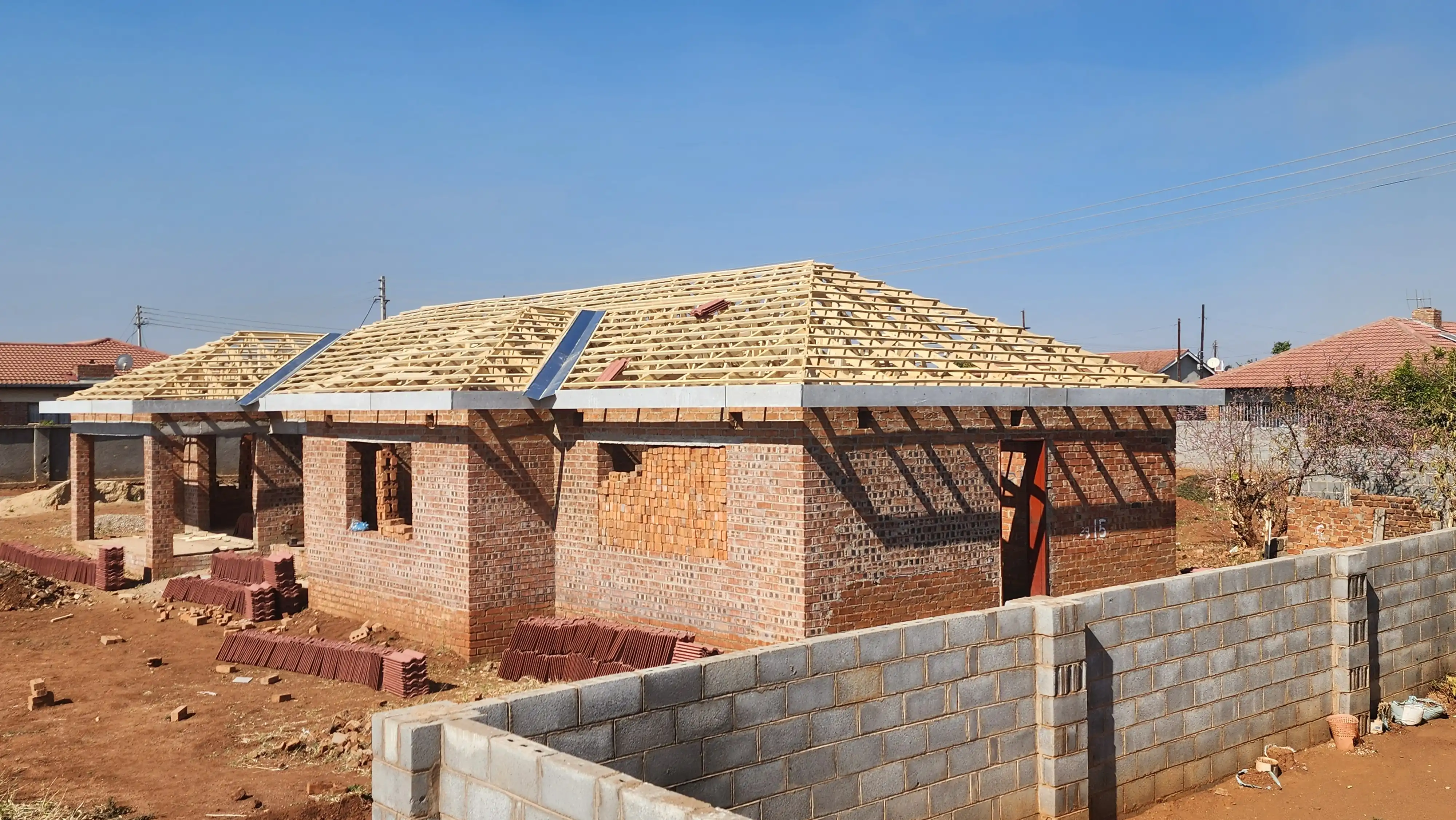
The Stage Most Homeowners Overlook
Many homeowners pour their attention into tiles, paint colors, and finishes. But the real story of a house is written earlier — in the roof structure.
That network of timber trusses sitting above the walls isn't just wood. It's the frame that carries the weight of the entire roof, distributes load across every wall, and determines how the house handles rain, wind, and time. Get this stage wrong, and every finish applied afterward is sitting on a weak foundation.
What Quality Roof Framing Looks Like
A well-executed roof structure has a few consistent markers:
- Precision-cut timber trusses, properly aligned
- Even load distribution across all supporting walls
- Consistent spacing suited to the roofing sheets going on top
- A roof pitch calculated for proper water runoff, not just appearance
None of this happens by accident. It's the result of planning before the first truss goes up, not adjustments made on the fly.
The Mistakes That Cause Problems Later
Most roofing failures don't start the first time it rains — they start during installation, and they stay invisible until much later.
Weak joints, inconsistent spacing, and untreated or ungraded timber are the usual culprits. These shortcuts can shave costs off the upfront bill, but they tend to resurface as sagging roofs, leaks, or structural stress — and by the time the symptoms show, the fix is far more expensive than getting it right the first time would have been.
Questions to Ask Before Your Roof Goes Up
Homeowners who've been through a bad roofing experience tend to ask a different set of questions before construction reaches this stage:
- Has the timber been properly treated and graded?
- Were the trusses engineered, or just measured and cut on site?
- Does the installation team have direct experience with this roof type and pitch?
Asking these questions before installation is far cheaper than answering for the consequences after.
Why This Stage Matters More Than Finishes
Right now, before tiles, ceilings, or any finishing touches go in, this is the point where the real quality of a home gets locked in. A roof structure done properly translates directly into a longer-lasting house, lower maintenance costs over time, and noticeably better comfort once the building is finished.